
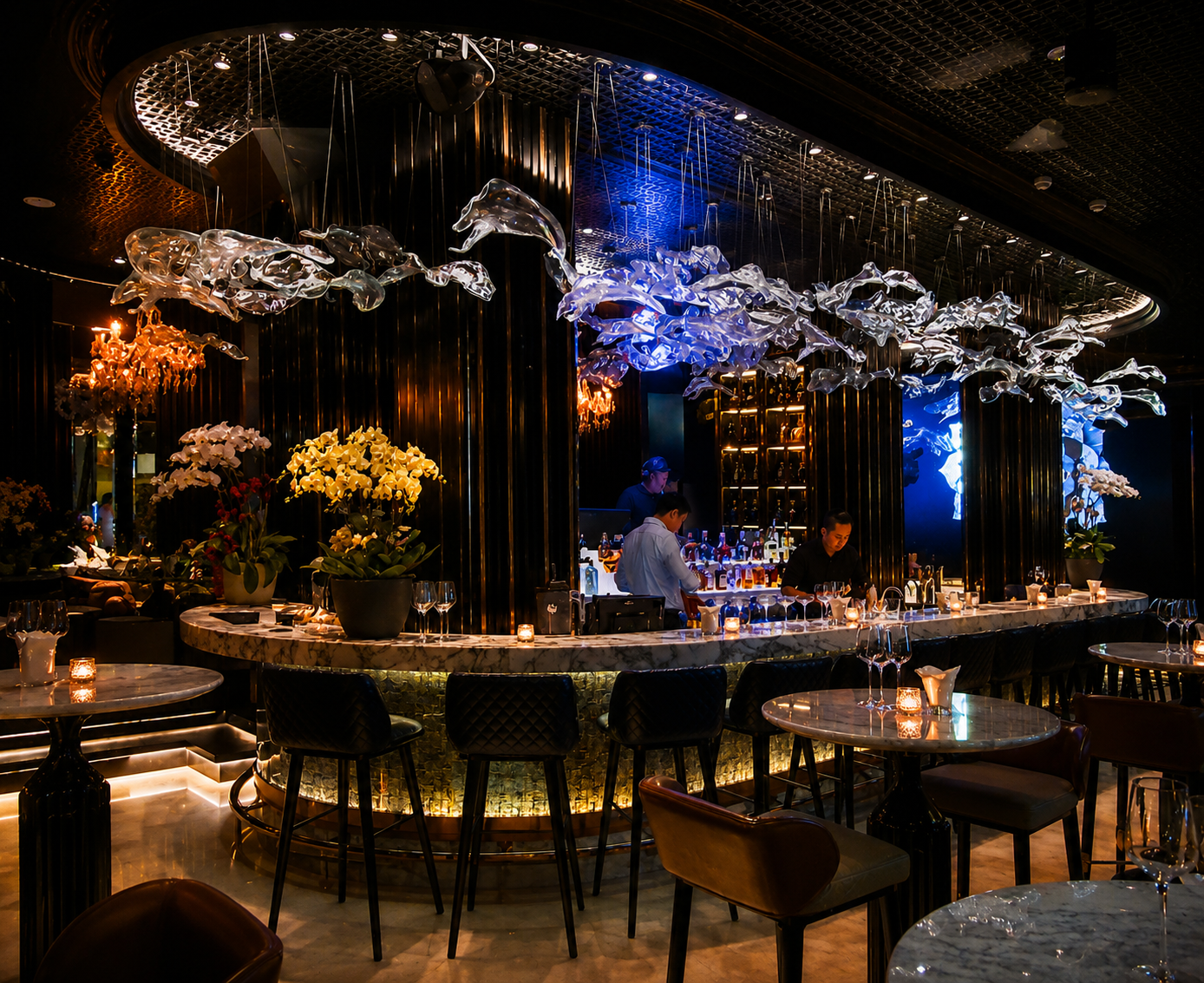
Slumped glass, an ancient technique dating back to Roman times, is shaped by heating glass over a mold, a method originally developed for jewelry making more than 2,000 years ago. The technique experienced a revival during the Renaissance and gained renewed popularity in the early 20th century, particularly in the United States.
Unlike cast glass, which is poured into a mold, slumped glass is formed from existing glass sheets by heating them until pliable, allowing gravity to gently bend the glass into the mold's intricate patterns.
Today, slumped glass thrives in large-scale architectural applications, thanks to advances in temperature-controlled kiln technology that make it possible to craft oversized decorative glass panels. The process begins by placing glass onto a mold, then heating it until the glass reaches a pliable state, at which point gravity presses it down into the mold. Temperature is carefully controlled over a specific duration to ensure the glass retains every sharp detail. Once cooled, the glass hardens and is removed from the kiln with carefully controlled tension. Specialized mold-making techniques and Boron Nitride compounds prevent the glass from sticking to the mold while preserving its natural sheen.
Crafting Beauty: The Art of Slumped Glass Production
Producing slumped glass requires a delicate balance of technical expertise and artistic skill. Glass sheets are typically cut larger than the mold to compensate for shrinkage during the firing process, ensuring the final piece achieves the desired shape. Depending on each mold's surface, this adjustment can vary and sometimes requires multiple rounds of testing to reach a flawless finish.
One of the most critical factors in this process is controlling the glass's coefficient of thermal expansion to ensure durability after firing. To achieve this, manufacturers often choose high-quality glass brands, such as Asahi from Japan, known for its exceptional heat resistance and shape retention during the firing process.
Celebrating Light and Detail: Artistic Finishing Techniques
To elevate the aesthetic value of slumped glass, a variety of finishing techniques are applied to enhance depth, texture, and color tone. Some common methods include:
Frosted surface treatment, which creates a soft, diffused lighting effect.
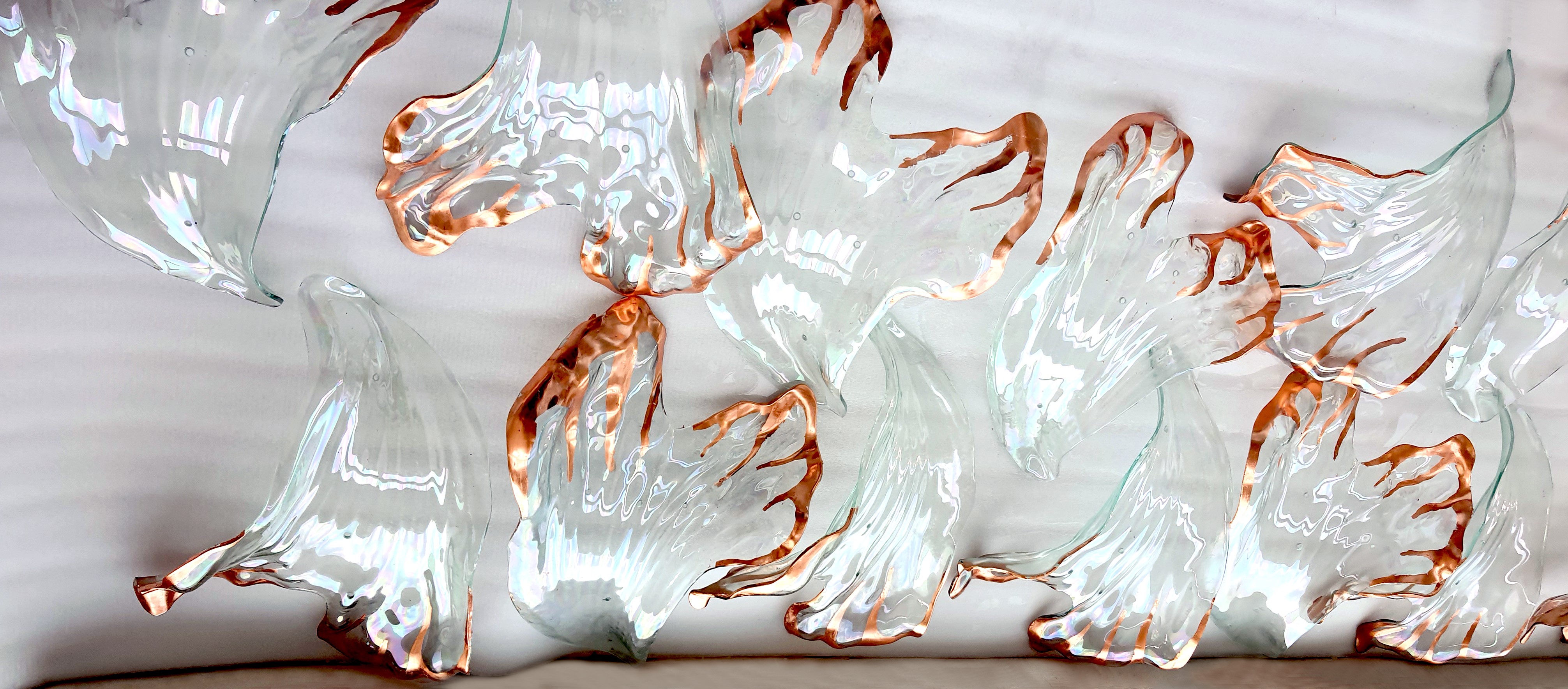
Iridium coating, which produces a distinctive shimmer, allowing the glass to reflect light in dazzling colors.
Painted or sprayed enamel finishes, which allow the glass surface to catch light in artistic ways.
These techniques penetrate deep into the glass surface, creating a lasting effect that helps the artwork retain its brilliance over time.
Slumped glass is a remarkable technique that blends ancient craftsmanship with modern innovation, transforming architectural surfaces into captivating works of art. With its ability to capture light, render intricate detail, and create dynamic texture, slumped glass has become a top choice for contemporary designers seeking to create striking facades.
Combining refined technique with creative vision, slumped glass not only elevates aesthetic value but also delivers high functionality, striking a perfect balance between artistic beauty and architectural performance.
